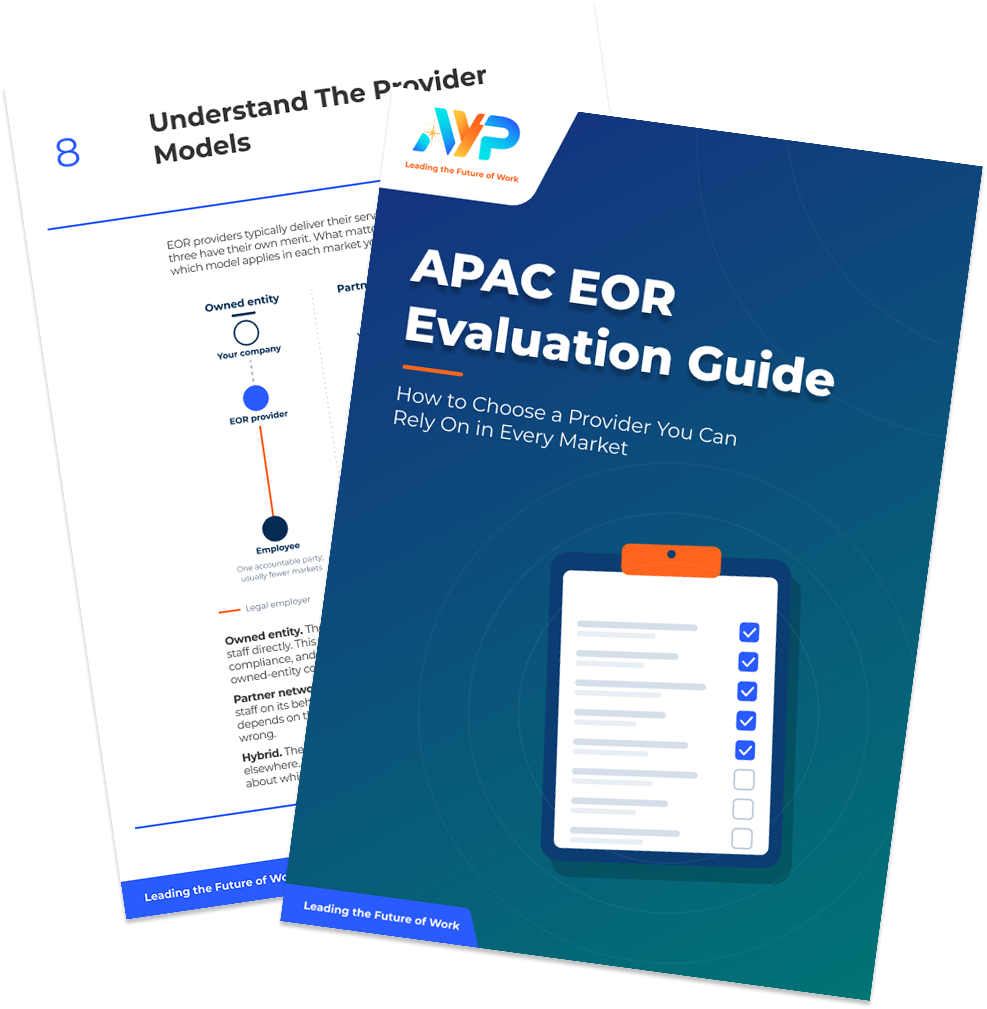
APAC EOR Evaluation Guide
How to Choose an APAC EOR Provider You can Actually Rely On
Eight criteria and a red flags checklist for HR leaders comparing EOR providers across Asia-Pacific.
What’s Inside
This guide covers eight criteria for evaluating EOR providers in APAC: entity model and transparency, compliance and liability, all-in cost, payroll accuracy, immigration and visa sponsorship, employee experience, service model and local presence, and data and exit terms. For each criterion, it explains why it matters, the questions worth sending in writing, what a strong answer looks like, and the warning signs that tell you to keep looking. The guide also covers the three main provider models, a hiring profile framework to help you focus on the criteria that matter most for your situation, and a red flags checklist to run before you sign.
Who Will Benefit

Companies Choosing Their First APAC EOR — for companies entering APAC for the first time through EOR who need a provider that fits their current scale and hiring profile, without getting locked into terms that stop working once they grow.
HR Teams Managing Foreign Hires or Relocations — for HR professionals coordinating expat hires or intra-company transfers who need to know which providers can actually sponsor work passes in their target markets, and which ones cannot.
Regional HR Directors — for HR Directors and Heads of People leading EOR evaluations across one or more APAC markets who need a structured way to compare what providers actually deliver, not just what they say on a discovery call.
Finance Teams — for finance leads responsible for understanding the real cost of an EOR arrangement, including setup fees, FX margins, deposits, off-cycle payroll charges, and exit terms that rarely appear in the headline monthly quote.
Legal & Compliance Teams — for legal and compliance professionals who need to assess indemnity scope, liability caps, employment contract quality, and data storage practices before any contract gets signed.
What You’ll Learn
Why EOR Selection Is Harder in APAC Than Anywhere Else
APAC is not one employment market. Indonesia ranks 15th on TMF Group's Global Business Complexity Index 2026. Hong Kong ranks 78th. A provider that performs well in one market may rely on a completely different setup in the next. Coverage is not the same as capability, and the gap between the two is where most EOR problems start.
Know Your Hiring Profile Before You Compare Anyone
Three hiring profiles shape which criteria deserve the most attention: a market test (local hires in one to three markets), talent mobility (relocating leaders or specialists across borders), or a regional build (long-term teams across multiple markets). Knowing your profile before any vendor conversation means every answer gets measured against the same standard.
Eight Criteria, the Questions to Ask, and What Good Answers Look Like
For each of the eight criteria — entity model, compliance and liability, all-in cost, payroll accuracy, immigration sponsorship, employee experience, service model, and data and exit terms — the guide gives you the specific questions to send before discovery calls, what a strong answer looks like, and the warning signs that tell you to keep looking.
A Process for Getting to a Decision You Can Stand Behind
Five steps from shortlist to signed contract: focus on your priority criteria, send the same questions in writing to every provider, bring Finance and Legal in from the start, compare what the sales pitch says against what the contract actually contains, and speak to existing clients before you decide. Includes a red flags checklist to run one final time before you sign.
Get the APAC EOR Evaluation Guide