Market Size: 13.6 million skilled workers with 43% holding tertiary qualifications
Hiring Timeline: 1-3 days (employment partners) vs 6-8 weeks (local entity)
Total Employment Cost: 125-140% of base salary including mandatory contributions
Key Requirement: 11% superannuation guarantee + Fair Work Act compliance
Best Sectors: Technology, healthcare, engineering, renewable energy
How to Hire in Australia
Australia offers one of the world’s most attractive talent markets for international expansion. With strong English proficiency, advanced digital infrastructure, and strategic time zones for global business, the country provides access to highly skilled professionals across key industries.
However, international companies face complex employment regulations and mandatory benefit requirements that demand careful navigation. This guide provides actionable insights for hiring talent in Australia while ensuring full compliance with local laws.
Robust legal framework protecting both employers and employees
Strategic location for Asia-Pacific operations
Understanding Australia’s Talent Market
Australia’s economy demonstrates consistent growth with GDP averaging 2.1% annually. The workforce shows exceptional digital adoption with 88% of businesses using cloud computing and 42% of employees working remotely at least one day per week.
Regional Talent Distribution:
Sydney/Melbourne: 60% of professional workforce (finance, technology)
Perth: Mining and resources hub
Brisbane: Growing startup and renewable energy sectors
Average Salary Ranges:
Role Level
Annual Salary (AUD)
Annual Salary (USD)
Junior Professional
$55,000 - $75,000
$37,000 - $50,000
Mid-Level Professional
$75,000 - $110,000
$50,000 - $74,000
Senior Professional
$110,000 - $160,000
$74,000 - $107,000
Executive Level
$160,000 - $300,000+
$107,000 - $201,000+
A Brief About Employment Laws in Australia
Fair Work Act 2009
The Fair Work Act establishes minimum employment standards including:
Maximum 38-hour working weeks
Overtime compensation requirements
Protection against unfair dismissal
Applies to all employment types (full-time, part-time, casual)
40% lower turnover for companies offering flexibility
Hire in Australia with AYP
Hiring talent in Australia presents significant opportunities but requires navigating complex employment laws, cultural expectations, and substantial administrative requirements. From mandatory 11% superannuation contributions to Fair Work Act compliance, international companies face operational challenges when expanding into the Australian market.
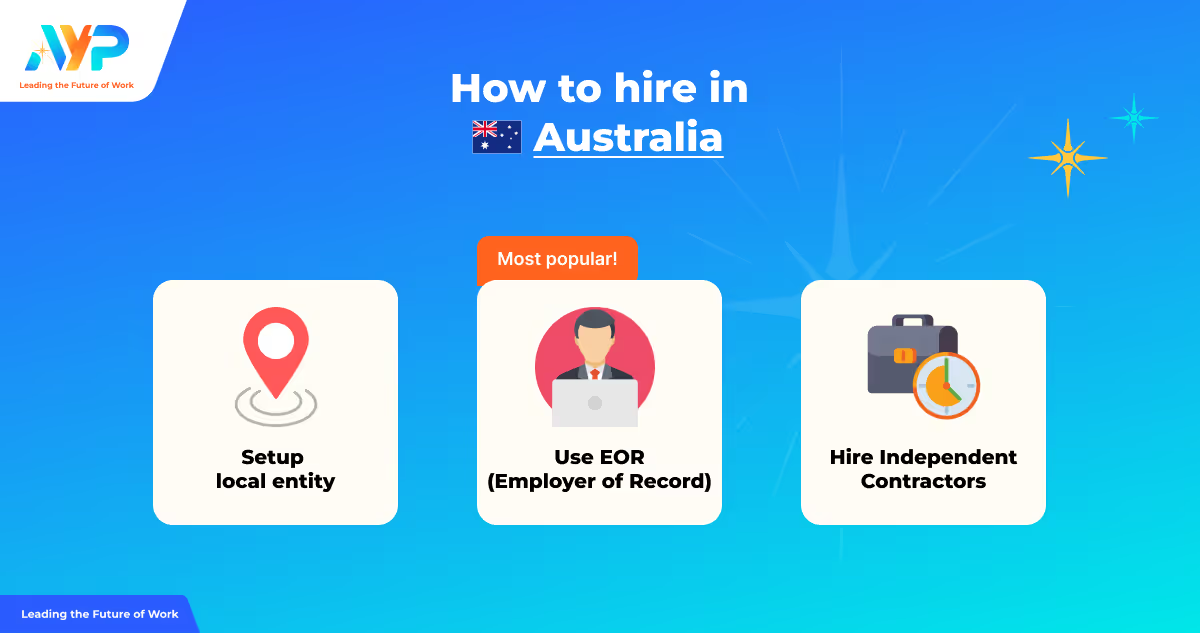
Success depends on understanding total employment costs (125–140% of base salary), respecting work-life balance expectations, and implementing robust compliance systems. Companies must choose between local entity establishment, contractor arrangements, or employment partner solutions based on timeline, scale, and risk tolerance.
Hiring in Australia, especially for international companies, has its complexities. This is where AYP Group comes in.
AYP Group is the leading Asia Pacific employment and payroll platform that empowers organizations to build distributed teams across Asia Pacific, including Australia. We ensure full compliance with local employment laws while streamlining your expansion process.
With AYP, you can:
Hire and onboard Australian employees quickly without establishing a local entity
Access competitive benefits packages that attract top Australian talent
Ensure seamless payroll processing and superannuation compliance
Navigate complex Fair Work Act requirements with expert local support
Ready to hire in Australia with confidence? Contact AYP Group today for a comprehensive consultation on your Australian EOR requirements and discover how guaranteed compliance and transparent pricing can accelerate your business success in Australia.
Frequently Asked Questions (FAQs)
What is the minimum wage in Australia for 2026?
How much does it cost to hire an employee in Australia?
Can I hire Australian employees without a local entity?
What are the mandatory benefits for Australian employees?
How long does it take to hire someone in Australia?
The typical hiring process takes 6–8 weeks from job posting to start date when hiring directly. Using employment partners can reduce this to 1–3 days for contract setup, though candidate sourcing and interviews still require 2–4 weeks.
Do I need to sponsor foreign workers in Australia?
What’s the difference between employees and contractors in Australia?
Which states have the highest employment costs in Australia?
Can Australian employees work remotely for international companies?
What happens if I don’t comply with Australian employment laws?